
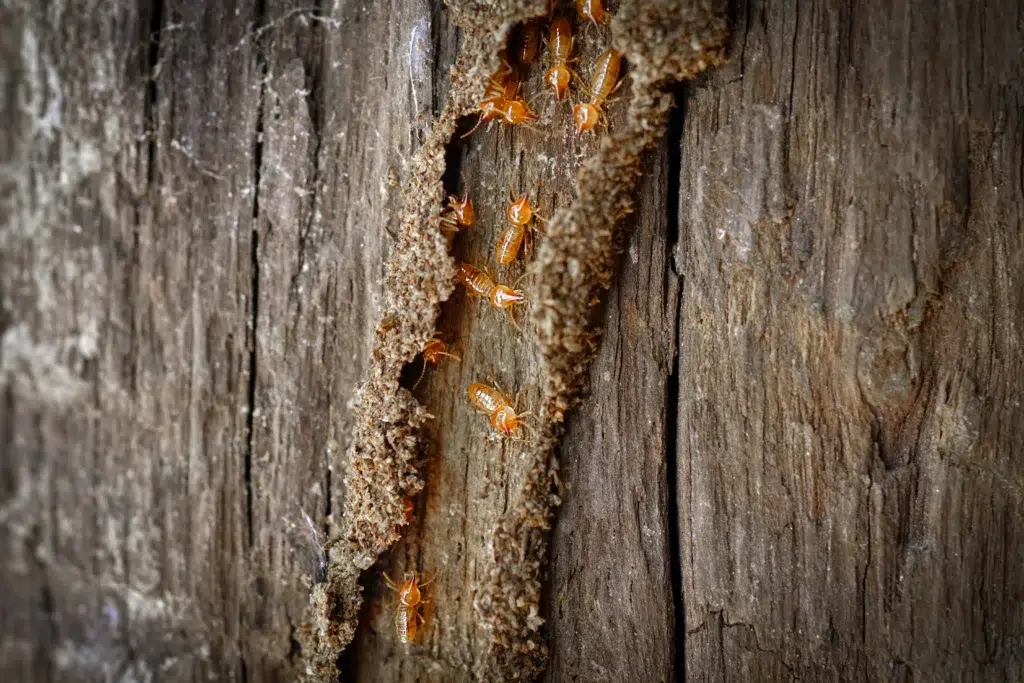
A contractor pulls back a section of wall sheeting during a bathroom renovation and finds timber that crumbles at the touch. A homeowner notices a doorframe has dropped slightly overnight. Someone taps an internal wall and hears a hollow, papery sound where solid timber should be. In each case, the reaction is the same: shock at the damage, followed by the question of how long this has been going on.
In many cases, the answer is longer than anyone expects. Termite activity in a Sydney home can continue for months, sometimes a year or more, before producing a sign most people would recognise. That isn’t because the damage is minor. It’s because of how termites feed, where they establish themselves, and what the early stages of an infestation look like from the outside, which is usually nothing at all.
The Feeding Pattern That Keeps Termites Out of Sight
Termites don’t eat through a wall from the outside in. They work from the inside out, consuming the core of a timber element while leaving the outer surface intact. A stud inside a wall cavity can be almost entirely hollowed out while the plasterboard or paint covering it shows no sign of damage. The same is true for subfloor bearers, floor joists, roof framing and door frames.
This feeding pattern is why termite activity in Sydney homes can continue for months before any surface evidence appears. The structure looks sound from every angle a homeowner can access, while the damage builds up in spaces that can’t be seen without specialist equipment or opening the wall.
Subterranean termites build mud leads to travel across open spaces, and they route them inside wall cavities and beneath flooring, where they stay out of sight.
Which Sydney Homes Give Termites the Longest Window
Not all Sydney homes carry the same level of risk, and some types of construction let termites establish and feed for long periods without being disturbed.
Brick veneer construction, common across Western Sydney, the Hills District and many newer suburban areas, uses an outer brick skin with an internal timber frame. The brick exterior gives the impression of a solid, durable structure, but the framing that carries the load is timber, concealed behind wall sheeting. Termites can enter from below, travel up the frame and feed through the internal timber without any sign on the outside.
Older timber-framed homes, including weatherboard houses and homes with raised timber subfloors in parts of the inner west and around Parramatta, face different conditions. Timber cladding, subfloor framing and wood-to-soil contact from garden beds or decking near the house give termites a more direct path in.
Properties with timber decking or garden sleepers against the structure carry a higher risk for the same reason.
What the Signs Actually Mean by the Time You Notice Them
The signs most homeowners associate with termites aren’t early warnings. By the time they appear, termites have often been feeding for some time.
Doors and windows that start to stick, blistering or bubbling paint on internal walls, soft or springy flooring and a hollow sound when tapping a wall can all point to termite damage, although some of these also have other causes. Knowing the early signs of termite activity helps, but these particular signs usually mean damage has already occurred.
Alates, the winged reproductive termites, often emerge in large numbers in spring after rain, and they indicate an established colony nearby. Finding them indoors near window sills or light fittings can mean the colony is inside the building or very close to it.
Waiting for visible signs before arranging an inspection means the damage may already be well advanced.
What a Termite Inspection in Sydney Detects Before Visible Damage Appears
A professional termite inspection using the right equipment can often identify termite activity before it produces visible signs. That’s the practical value of regular inspections: they find problems while intervention is still relatively straightforward, rather than after structural repairs are needed.
Termatrac uses microwave motion detection to locate termite movement inside wall cavities and structural timber without opening them up. Thermal imaging cameras can show temperature and moisture differences behind plasterboard and cladding that may indicate an active colony.
Moisture meters detect elevated readings in walls and floors where termites may have introduced moisture into the surrounding timber. A qualified inspector uses these tools alongside a physical check of the subfloor, roof void and external perimeter to determine whether activity is present and where.
That combination is what separates a professional inspection from a visual walkthrough.
What a Year of Undetected Activity Can Cost
An established subterranean termite colony can cause significant damage over months of undetected feeding, spreading through wall frames, floor joists and roof timbers. The pace depends on the species, the size of the colony and the timber available, which is why termites can damage a Sydney home faster than many owners expect.
Repair costs vary widely, from a few thousand dollars for localised damage to considerably more where structural framing needs replacing. Most home insurance policies in Australia exclude termite damage, so repair costs usually fall on the homeowner. Check your own policy wording to confirm.
AS 3660.2 recommends termite inspections at least every 12 months, and more often in areas of high termite risk. Much of Sydney is considered high risk because of its climate, soils and the number of timber-framed homes, so an annual termite inspection is a sensible minimum.
An inspection costs a fraction of a typical repair bill. The earlier activity is found, the more treatment options are available and the less structural damage has occurred.
If you haven’t had a termite inspection in the past 12 months, call Pest Power Sydney on 0412 931 208 to book one.
Frequently Asked Questions About Termites in Sydney Homes
How long can termites go undetected in a Sydney home?
Often for months, and sometimes a year or more, before a visible sign appears. Homes with complex wall cavities or limited subfloor access can take longer to show any indication. Regular professional inspections using detection equipment are the most reliable way to find activity early.
Does home insurance cover termite damage in NSW?
Usually not. Most home and contents insurance policies in Australia exclude damage caused by termites, so repair costs generally fall on the homeowner. Check your policy wording, and treat regular inspections as your best protection.
What attracts termites to a residential property?
Moisture and accessible timber. Leaking pipes, poor drainage, blocked gutters and timber in direct contact with soil near the house all create conditions termites look for. Keeping drainage clear and separating soil from structural timber are the most practical preventative steps.
How often should I get a termite inspection in Sydney?
AS 3660.2 recommends inspections at least every 12 months, and more often where termite risk is high. Homes with a history of termite activity may benefit from inspections every six months.
What happens after termites are found during an inspection?
The inspector identifies the species, assesses the extent of activity and recommends a termite treatment approach, typically a liquid termiticide barrier, a baiting system or a combination of both. Any structural damage found should be assessed by a builder before repairs begin.