
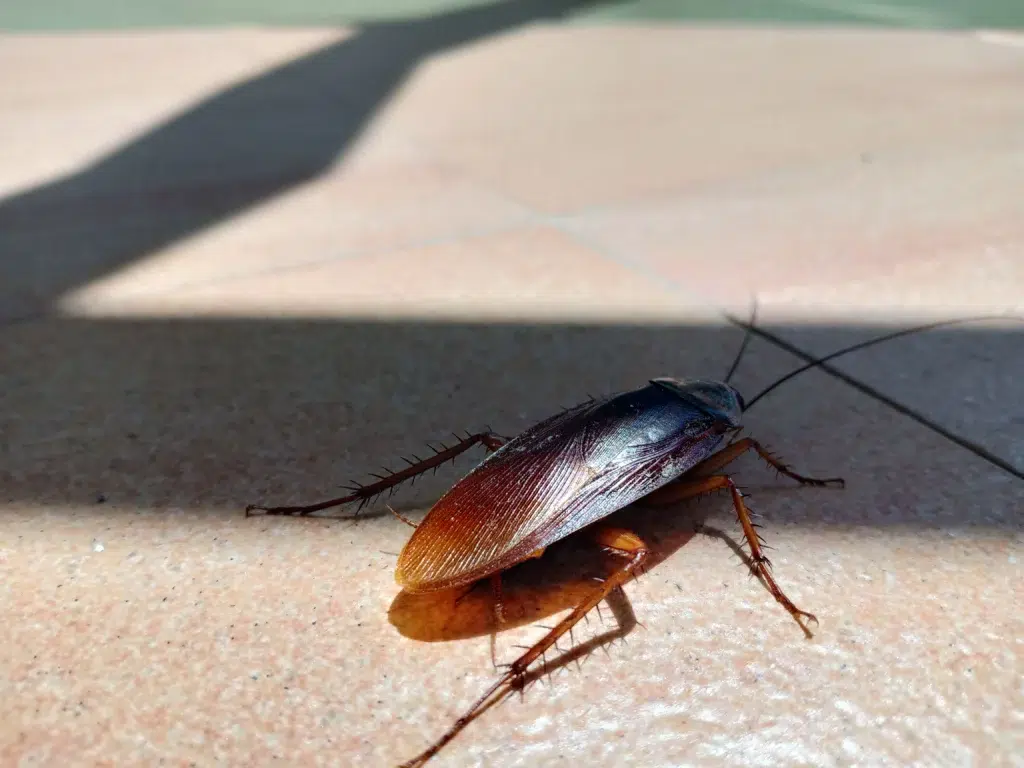
If you have recently sprayed your kitchen and are wondering how long the treatment will last, the answer depends on the product, the surface and how the area is used afterwards. For German cockroaches, however, spray duration is only part of the solution, as established infestations often remain hidden inside cabinetry, appliance areas, cracks and wall voids.
How Long Consumer Cockroach Sprays Typically Last
Consumer cockroach sprays vary considerably in how long they remain effective.
A contact aerosol is mainly designed to kill cockroaches that are sprayed directly. It may provide little ongoing protection once the product has dried.
A residual surface spray is designed to remain active on treated areas for longer. Depending on the product, surface and household conditions, the manufacturer may claim residual activity lasting for weeks or even months.
However, these claims usually depend on the product being:
- Applied according to the label
- Used on a suitable surface
- Left undisturbed after application
- Protected from regular washing, moisture and direct sunlight
Rather than relying on one standard timeframe, check the residual-control claim and application instructions on the product label.
A spray that performs well on a sealed skirting board may not last as long on porous timber, grout or unfinished cabinet surfaces. These materials can absorb the product, reducing the amount left on the surface where cockroaches are likely to cross.
If you sprayed several weeks ago and cockroach activity has returned, the product may have worn away, been cleaned off or failed to reach the main harbourage areas.
How Long Professional Residual Treatments Last
Professional cockroach treatments may provide a longer and more reliable period of control because the products and application methods are selected for the infestation, surface type and treatment area.
Depending on the situation, a licensed pest controller may use:
- Residual surface treatments
- Non-repellent insecticides
- Gel baits
- Insecticidal dusts
- Monitoring traps
- Targeted crack-and-crevice treatments
Some professional residual products are designed to remain active for an extended period on suitable, undisturbed surfaces. However, no professional product lasts indefinitely, and the actual treatment life depends on the product label, surface type, moisture, cleaning and level of cockroach activity. Areas such as skirting edges, wall junctions and protected cracks may retain treatment longer than kitchen floors, wet areas or surfaces that are regularly wiped.
A professional pest exterminator from Pest Power Sydney selects the most suitable cockroach treatment for the conditions inside your property rather than relying on the same generic spray for every infestation
Book a professional inspection today
If you’ve noticed any cockroach activity, even a single sighting. Catching an infestation early is the difference between a manageable treatment and a much bigger health problem.
What Makes Cockroach Spray Wear Off Faster?
Several factors can reduce how long a cockroach treatment remains effective inside a Sydney home.
Cleaning Treated Areas
- Mopping, scrubbing or wiping treated surfaces can remove the residual deposit.
- This does not mean you should stop cleaning your kitchen or food-preparation areas. Residual insecticides should not be applied directly to food-contact surfaces.
- After treatment, continue cleaning benches, sinks and food-preparation areas normally. Avoid washing treated skirting edges, cracks and other designated treatment zones for the period recommended by your cockroach exterminator.
- Always follow the specific aftercare instructions provided after the service.
Moisture and Humidity
- German cockroaches commonly live in warm, humid areas near sinks, dishwashers, refrigerators and plumbing fixtures.
- Moisture, steam and frequent condensation may reduce treatment performance in these locations. Sydney’s warmer and more humid months can also create favourable conditions for cockroach activity.
- Repairing leaking taps, pipes and appliances can help reduce the moisture German cockroaches need to survive.
Porous and Absorbent Surfaces
- Porous materials such as raw timber, grout, plaster and unsealed cabinetry may absorb liquid treatments.
- This can reduce the amount of product remaining on the surface. Sealed, non-porous surfaces may retain some residual products for longer, provided they are not washed or disturbed.
Missed Harbourage Areas
Sometimes a treatment appears to have stopped working when the main issue is incomplete coverage.
German cockroaches can shelter in extremely narrow spaces, including:
- Cabinet hinges
- Drawer runners
- Gaps around pipes
- Cracks behind splashbacks
- Areas beneath refrigerators and dishwashers
- Wall voids
- Electrical and appliance cavities
If these locations were not identified and treated appropriately, cockroaches may continue breeding away from the sprayed surfaces.
Why Spray Duration Alone Does Not Determine Success
Even a properly applied residual spray may not eliminate an established German cockroach infestation on its own.
German cockroaches spend much of their time hidden in cracks, cabinetry and areas behind or beneath appliances. Many of these locations are difficult or inappropriate to treat with an ordinary surface spray.
A professional treatment plan may use both residual products and gel bait, with each product serving a different purpose.
Residual treatments help control cockroaches that travel across treated surfaces. Gel bait can be placed close to hidden harbourage areas where cockroaches feed and gather.
Cockroaches consume the bait and may transfer small amounts through their natural feeding, grooming and waste-consuming behaviour. This can help target cockroaches that do not cross an exposed spray treatment.
However, gel bait and spray should not simply be applied over one another. Some bait labels advise against placing gel on recently sprayed surfaces or spraying directly over bait placements.
The products must be positioned strategically and used according to their registered labels.
Why German Cockroaches Often Survive DIY Spraying
Seeing live cockroaches after spraying does not always mean the product has completely failed.
Possible reasons include:
- Cockroaches were hiding in untreated areas
- Egg cases remained protected from the application
- The spray was used only as a direct-contact treatment
- The treated surface was cleaned too soon
- The infestation extended into neighbouring rooms or units
- The cockroaches avoided treated areas
- The population was larger than initially expected
German cockroaches reproduce quickly and can establish themselves throughout kitchens, laundries and other warm areas.
In apartments, activity may also move between adjoining units through plumbing penetrations, wall voids and shared service areas. Treating one visible location without identifying the wider source can lead to repeated activity.
How to Help a Professional Treatment Last Longer
A few practical steps can help protect the treatment and reduce the chance of German cockroaches returning.
Follow the Aftercare Instructions
Your pest controller should explain which areas were treated and which surfaces should not be washed immediately.
Follow those instructions rather than applying one general rule to the entire kitchen.
Do Not Spray Over Professional Treatments
Avoid applying retail aerosols over professional treatment areas unless your pest controller advises you to do so.
Some aerosol sprays may repel cockroaches away from gel bait or interfere with the intended treatment strategy.
Leave Gel Bait Undisturbed
Gel bait is often placed in small amounts near hinges, cracks, cabinet corners and appliance areas.
Do not wipe it away unless your pest controller instructs you to remove or replace it.
Control Food Sources
Store dry food in sealed containers, clean spills promptly and avoid leaving pet food out overnight.
Even small amounts of grease, crumbs and food residue can compete with gel bait and support cockroach activity.
Reduce Clutter
Wipe up standing water and repair leaking taps, pipes and appliances.
German cockroaches can survive with limited food, but they rely heavily on access to moisture.
Reduce Water Sources
Cardboard boxes, stacked packaging and crowded cupboards provide shelter and make inspection more difficult.
Removing unnecessary clutter gives cockroaches fewer places to hide and helps treatments reach the areas where they are active.
When Is It Time to Arrange a Follow-Up?
How soon a follow-up is needed depends on the infestation level, the treatment method and the activity found after the initial service.
An active German cockroach infestation may need to be reassessed within several weeks. Severe or long-established infestations may require more than one visit to break the breeding cycle and treat newly identified harbourage areas.
Signs that further treatment may be needed include:
- Renewed night-time sightings after activity had decreased
- Fresh droppings in previously clear areas
- Small nymphs appearing after treatment
- Cockroaches moving into other rooms
- New egg cases
- Ongoing activity around appliances or cabinetry
Nymphs are small, wingless juvenile cockroaches. Seeing them after treatment may indicate that egg cases have hatched or that breeding is continuing in an untreated location.
A follow-up inspection is usually more useful than repeatedly applying another retail aerosol without knowing where the infestation is centred.
The Bottom Line
How long German cockroach spray lasts depends on the type of product, treated surface, cleaning, moisture and application method.
Some contact sprays provide little residual control. Residual consumer products may remain active for longer when used correctly, while professional treatments can provide an extended control period on appropriate, undisturbed surfaces.
However, duration alone does not guarantee elimination.
Established German cockroach infestations often require a combination of inspection, targeted residual treatment, gel bait, sanitation and follow-up monitoring. The goal is not simply to spray the cockroaches you can see.
Having it dealt with properly
Knowing how long a residual lasts matters mainly because it tells you when the treatment stops protecting you, which is exactly when an untreated harbourage starts repopulating the kitchen.
On a cockroach job the inspection goes to the harbourage rather than the open floor: motor housings, hinge voids, the cavity behind the kickboard, under the sink and the back of the dishwasher. Gel bait goes into those voids with an insect growth regulator, and a follow-up four to six weeks later catches the generation that hatches after the first visit. Cockroach treatments start from $89 for a standard unit or small home, every job is quoted in writing, and the work carries a six-month warranty. Pest Power Sydney provides cockroach pest control in Sydney, and the work is carried out by the owner-operator, Mac Naji, and his technicians, who are the people customers name in the reviews. Call 0412 931 208 for a quote or a same-day inspection.
If you are working through this, it is worth also reading spray versus gel bait for German cockroaches, why cockroaches keep coming back after a treatment and why German cockroaches are the hardest to eliminate.
“I had a great experience with this pest control company. They were super responsive – got back to me straight away and booked a full spray for cockroaches and spiders within a few days, even during the holiday period! When we had heavy rain I noticed a couple of spiders inside, they came back under warranty and sprayed again for free. Very professional, reliable, and easy to deal with. Great value for money, and I’ll definitely use them again for next year’s annual pest control.” — a Google review of Pest Power Sydney. The business holds a 5.0 rating from more than 320 Google reviews.
It is to locate and treat the hidden harbourage areas where the infestation is breeding.
If German cockroaches keep returning despite repeated spraying, Pest Power Sydney can inspect the property, identify likely harbourage areas and apply a treatment plan suited to the conditions inside your home.
Frequently Asked Questions
How long does professional cockroach spray last?
Some professional residual treatments may remain active for an extended period on suitable, undisturbed surfaces. The actual duration depends on the registered product, treated surface, cleaning, humidity, moisture and application location.
Why are cockroaches still alive after spraying?
Cockroaches may be sheltering in untreated cracks, cabinetry, wall voids or areas behind appliances. Egg cases can also remain protected, allowing nymphs to emerge after the initial treatment.
Should I mop after cockroach treatment?
Continue cleaning food-preparation and food-contact surfaces normally. Avoid washing designated residual-treatment zones, such as treated skirting edges or cracks, for the period recommended by your pest controller.
When does cockroach spray stop working?
There is no universal timeframe. Contact sprays may provide little ongoing activity, while residual products may last for weeks or months under suitable conditions. Always check the product label and follow the application directions.
How often should German cockroach treatment be repeated?
An active infestation may need to be reassessed within several weeks. Ongoing maintenance visits may be scheduled less frequently, depending on the property, infestation pressure and results of the initial treatment.
Does a longer-lasting spray provide better cockroach control?
Not necessarily. A long residual period only helps if cockroaches cross the treated surface. German cockroaches often live in hidden harbourage areas, so successful control may also require gel bait, targeted crack-and-crevice treatment, sanitation and follow-up monitoring.
Trusted Pest Exterminators – Contact Us Now
Wondering when to re-treat? Residual life depends on surface, ventilation and cleaning. Pest Power Sydney provides residual cockroach spray treatment.