
Rat and Mouse Droppings: How to Tell What You Have
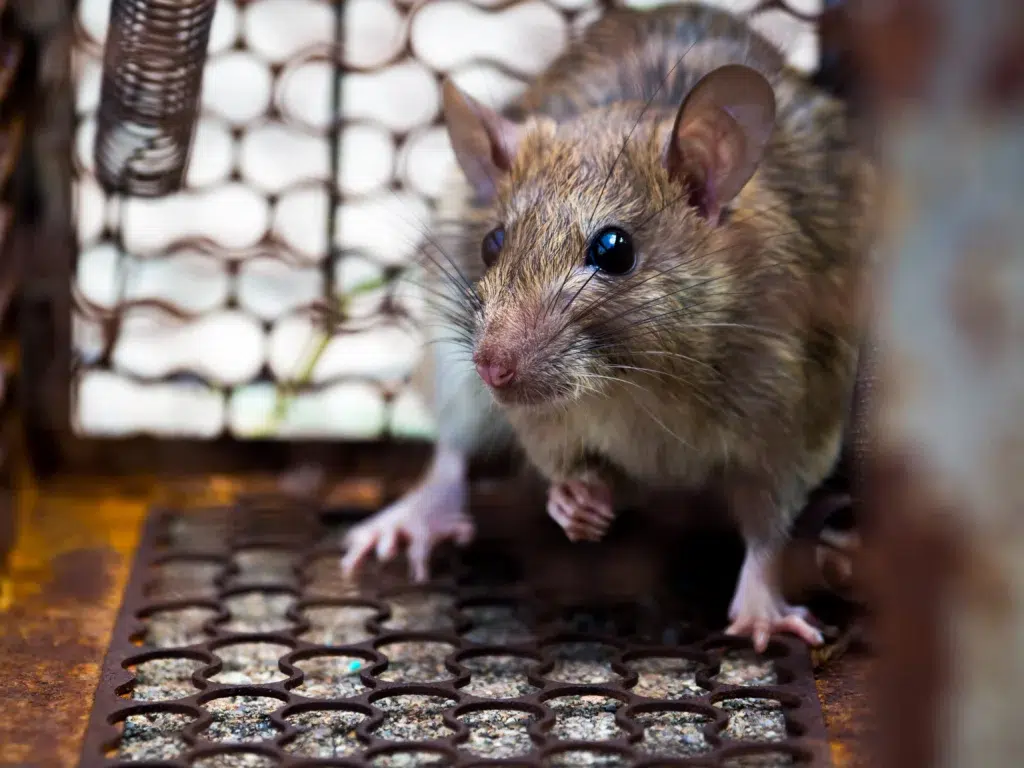
Droppings are usually the first hard evidence a household gets. You hear something in the roof for a week, you decide it is probably nothing, and then you move a box in the garage or pull the pantry apart and find a scatter of small dark pellets.
What those pellets look like tells you three useful things: whether you have rats or mice, whether the activity is current or finished, and where the animals are actually travelling. This page covers all three, plus the one safety point that matters more than any of it.
Do not sweep or vacuum droppings dry
Dry sweeping and vacuuming throw dried droppings and urine into the air as dust. Dampen the area first with a household disinfectant, leave it for a few minutes, then wipe it up with paper towel. The full method is set out further down this page.
Rat droppings or mouse droppings
Size is the giveaway, and the difference is large enough to judge by eye once you know what you are comparing.
| Mouse | Roof rat (black rat) | Brown rat (Norway rat) | |
|---|---|---|---|
| Length | 3 to 6 mm | 10 to 13 mm | 17 to 20 mm |
| Shape | Like a grain of rice, pointed at both ends | Curved and spindle shaped, tapering to points | Blunt, rounded ends, capsule or olive pit shaped |
| Quantity | Very high, scattered widely across a room | Moderate, concentrated along travel routes | Moderate, often in small heaps |
| Where you find them | Everywhere: drawers, pantry shelves, behind the toaster, in the cutlery tray | Roof void, wall cavities, along beams, on top of cupboards | Ground level: subfloor, garage, garden sheds, near drains and compost |
In Sydney, the roof rat is the species most households encounter. It climbs well, lives above head height, and is the animal behind most of the calls we get about noise overhead. The brown rat is heavier, stays low, and is more common around drainage, subfloors, waterways and commercial waste areas.
Mouse droppings are the ones people most often dismiss, because they are small and easy to mistake for crumbs, dirt or seeds. The clue is the sheer number and the spread. A mouse produces a great many droppings and leaves them wherever it walks, so they turn up in drawers and on shelves rather than in one concentrated spot.
What it is not
- Cockroach droppings are much smaller, blunt at both ends, and often have fine ridges running down the length. The large species produce something that looks like coarse ground pepper or coffee grounds, usually in the same spot repeatedly
- Possum droppings are bigger again, 15 mm to 25 mm, more cylindrical, often deposited in clusters along a beam or in one latrine spot. Possum activity in a roof also sounds heavier and slower than rats
- Bat droppings crumble to a powder of shiny insect fragments when pressed. Rodent droppings do not sparkle
If the noise overhead is thumping rather than scurrying, read what the scratching noises in your Sydney roof at night actually mean before assuming rodents.
Fresh or old
This matters more than the species, because it tells you whether you have a live problem or the leftovers of one.
- Fresh, within a day or so: dark, almost black, with a slight sheen. Soft and putty-like. Moist
- A few days old: duller, firmer, still dark
- Old, weeks or more: grey or chalky, dry and hard, crumbles to dust when pressed, often with dust settled on top of it
Test with the end of a stick or a screwdriver, never with your fingers, and never with an unprotected hand. If it crumbles to powder, it is old. If it squashes, it is recent.
One useful trick: clear a small area completely, note the date, and check it again after two or three nights. Fresh droppings in a cleared area is the clearest evidence there is of a current population, and it also shows you exactly which route is being used.
Where droppings cluster, and what that tells you
Rodents are creatures of habit. They travel the same routes night after night, hugging walls and edges rather than crossing open floor, and they defecate as they move. So the droppings map the runways.
Look in these places, in this order:
- Roof void: along the top plate where the ceiling meets the wall, on beams, in the compressed tracks through insulation batts, and around the eaves openings
- Behind and under appliances: the fridge, the dishwasher, the oven, and the cavity behind a kickboard
- Inside the sink cabinet, particularly around the pipe penetration through the floor or wall
- Pantry corners and the back of low shelves, and inside anything cardboard
- Subfloor and garage, along the perimeter walls and behind stored boxes
- Wall cavities, visible where a cornice has gapped or a power point has been pulled out
Heavy droppings in one confined spot generally means a nest is close. Droppings spread thinly along a line means you have found a travel route rather than a nest. That distinction changes where control work goes, which is why a technician spends the first part of a visit looking rather than baiting. There is more on how the roof route works in rats in wall cavities and in our list of the six signs of a rodent infestation.
Cleaning up safely
Rodent droppings and urine can carry bacteria, including salmonella and leptospira, and dried material becomes airborne the moment it is disturbed. Sweeping and vacuuming are exactly the wrong tools because both of them aerosolise it.
The method:
- Ventilate the space. Open it up and leave it for half an hour before you start
- Wear disposable gloves, and a P2 mask in a confined space such as a roof void or subfloor
- Spray the droppings and the surrounding surface with a household disinfectant, or a bleach solution of roughly one part bleach to ten parts water, until visibly wet
- Leave it for at least five minutes
- Wipe up with paper towel and put the towel straight into a bag
- Double bag the waste and put it in the outside bin
- Disinfect the surface again, then remove gloves and wash your hands thoroughly
Contaminated insulation, cardboard and soft furnishings are usually not worth saving and should be bagged and removed rather than cleaned. Anything a rodent has walked over in a food area should be washed in hot soapy water, and any food packaging with gnaw marks should be thrown out rather than salvaged.
Droppings mean the problem is already established
By the time droppings are obvious, rodents have been present long enough to establish a routine. Baiting alone rarely finishes the job in a Sydney home, because the animals are getting in through a physical opening and a new one simply replaces the one you removed. Our post on rodent proofing versus baiting explains why the sealing work is the part that actually holds, and what is attracting rodents to your property covers the conditions that keep drawing them back.
What Pest Power does about rodents in Sydney
A rodent job that only puts out bait is half a job. Ours runs like this:
- A full inspection of the roof void, subfloor, kitchen, garage, perimeter and roofline, using droppings, rub marks, gnawing and runways to work out where the animals actually travel and how many you are dealing with
- Entry points identified and reported, which in Sydney is usually the eaves gaps, weep holes, the gap under a tiled ridge, damaged air vents, pipe penetrations and overhanging branches
- A control program placed where the activity is, in tamper-resistant stations, with placement chosen around children and pets rather than as an afterthought
- Proofing recommendations, because bait removes the population and sealing prevents the next one
- A six-month guarantee on the work
- Same-day and after-hours attendance across Sydney, and general pest treatments from $89, with the price confirmed before anything starts
Pet and child safety is the question we get asked most on rodent work, and it is a fair one. We answer it properly in is rodent control safe for kids and pets in Sydney homes.
Three customers on the rodent work, in their own words:
Got Mac to come do my rodent issue in the roof was on time and I can’t hear any mice in the roof. Highly suggested pest control in Sydney
Google review
Mason was really thorough, polite and did an excellent job. Have used these guys twice – once for rodent and once for cockroaches. Both times they were available to help in a good timeframe, clearly explained the process and has been successful. Would definitely recommend and use again if ever required.
Google review
Mick came out here today on a public holiday You’d think a service that requires instant attendance will be costly !! Well think again pest power are very careful and considerate about quoting couldn’t be happier. Also thanks mick your service was awesome and with great pleasure I type this review. Will choose you guys over any pest control company.
Google review
Found droppings and want to know what you are dealing with
Book an inspection and we will identify the species, find the runways and show you the entry points. Sydney wide, seven days, same-day attendance available, from $89, with a six-month guarantee.
Pest Power Sydney holds a 5.0 rating from more than 320 Google reviews. Full detail on the treatment is on our Sydney rodent pest control page.
Common questions about rodent droppings
How many droppings means an infestation
There is no threshold worth quoting, because a single mouse produces a surprising quantity. What matters is whether they are fresh and whether new ones appear after you clear the area. Any fresh droppings inside a home means active rodents.
Can I just vacuum them up
No. A vacuum blows fine dust through its exhaust and spreads it around the room. Dampen, wipe with paper towel, and bag it.
Do droppings mean there is a nest in the house
Not necessarily. Rodents will travel from a subfloor, a neighbouring roof, a garden shed or a fence line to feed inside and go back out. Where the droppings are heaviest is the best indicator of where the nest sits.
The droppings stopped appearing, is it over
Possibly, or the animals have moved to a different route within the same roof. Clear the old droppings so you have a clean baseline, then check the area again in a week.
What if the droppings are in the insulation
Contaminated insulation should be removed rather than cleaned. Bag it in the roof void and take it out, and treat the area before new batts go in.