
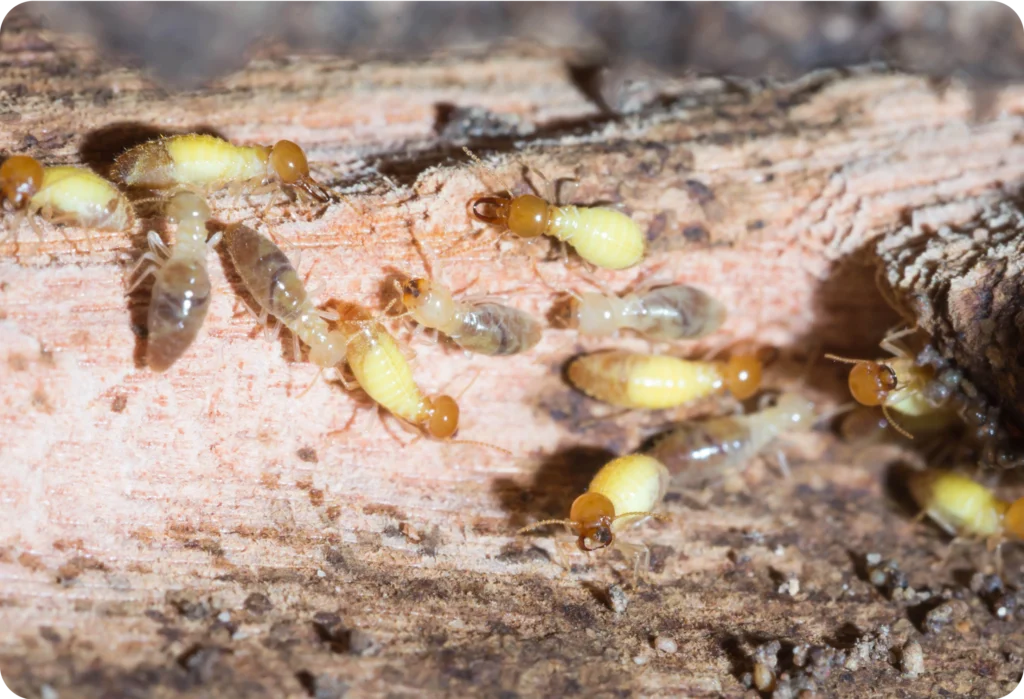
If you’ve had a termite inspection come back showing activity or high risk, the next question is always the same. What termite treatment is right for my Sydney home? Two approaches dominate termite protection across Sydney. Chemical barriers and baiting systems. Both are effective when installed correctly. Both are used regularly by licensed pest controllers. But they work differently, suit different properties, and come with different practical considerations for homeowners. Pest Power Sydney installs and maintains both systems across Sydney homes. Here’s a clear, practical comparison to help you understand what each one involves and which is more likely to suit your situation.
How Chemical Termite Barriers Work
A chemical termite barrier is exactly what the name suggests. A treated zone is created in the soil around and beneath a building, so that termites attempting to reach the structure encounter the active compound.
The installation involves applying a liquid termiticide to the soil around the full perimeter of the home. This typically requires:
- Trenching along the external wall bases so the product can be applied at the correct depth
- Drilling through concrete paths, patios, and paving next to the building to access the soil beneath
- Injecting product through drilled holes into the soil at regular intervals around the full perimeter
- Treating the soil beneath suspended floors where subfloor access allows
The compounds used in modern barriers work in two ways, depending on the product. Repellent barriers create a zone that termites detect and avoid. Non-repellent barriers allow termites to pass through the treated soil without detecting the product, after which the compound can spread through the colony via grooming and feeding behaviour, which with some products can suppress or eliminate it.
Non-repellent barriers have become the more common recommendation in recent years because termites can’t sense and route around the treatment zone the way they can with repellent products. A professionally installed chemical barrier typically protects for several years before the product needs renewing, depending on soil type, drainage, and the specific product used.
Where Chemical Barriers Are Most Commonly Recommended
Chemical barriers tend to suit properties where:
- The soil around the perimeter is accessible for trenching and injection
- Concrete slabs and paving can be drilled and treated without major disruption
- The building has a reasonably standard footprint that allows complete perimeter treatment
- An existing termite colony needs to be addressed as part of a broader protection strategy
For new builds in Sydney, chemical barriers are often installed as pre-construction protection before the slab is poured. For existing homes, post-construction installation takes more preparation but remains highly effective when carried out by a qualified technician.
Chemical Termite Barriers vs Baiting Systems in Sydney
Both chemical barriers and baiting systems are proven termite treatments. The right choice depends on your property layout, risk level, and whether active termites are present.
How Termite Baiting Systems Work
Termite baiting systems take the opposite approach. Rather than creating a chemical zone in the soil, baiting systems intercept termites moving through the property and use them as a delivery mechanism to wipe out the colony.
Bait stations are installed in the ground at regular intervals around the building perimeter. Each station holds a cellulose material that attracts foraging termites. When activity is detected at a station during a monitoring visit, a slow-acting bait is introduced.
Termites consume the bait and carry it back to the colony, where it spreads through the population via feeding and grooming. The slow-acting nature of the product is critical. Fast-acting compounds kill termites before they return to the nest. Slow-acting bait gives the product enough time to spread through the full population, eventually eliminating the queen and collapsing the colony.
Baiting systems require regular monitoring visits from a qualified technician to check station activity, introduce bait when termites are detected, and confirm colony decline over time. This ongoing maintenance is built into the system and is not optional.
Where Baiting Systems Are Most Commonly Recommended
Baiting systems tend to suit properties where:
- Chemical barrier installation is impractical due to inaccessible soil, extensive hard paving, or structural features that prevent full perimeter trenching
- The homeowner prefers a lower-impact installation with minimal disturbance to gardens, paving, or landscaping
- A specific active colony needs to be targeted and eliminated rather than simply excluded
- The property sits in a high-risk area that benefits from ongoing monitored protection with regular professional oversight
Baiting systems are also used alongside partial chemical barriers on properties where complete perimeter treatment isn’t achievable due to access limitations. The two approaches aren’t mutually exclusive, and many Sydney homes are best served by a combined strategy.
If you’re unsure which option suits your property, a professional termite assessment will give you a clear answer based on your specific site conditions.
Key Differences Homeowners Should Understand
Both systems provide genuine termite protection when installed and maintained properly. The practical differences that matter most to homeowners are these.
Installation disruption: Chemical barriers involve trenching, drilling, and significant soil treatment around the full perimeter, which can temporarily affect gardens, paths, and paving. Baiting systems use discrete in-ground stations with minimal surface disturbance.
Ongoing maintenance: A chemical barrier needs no routine servicing between renewals, but it still requires an inspection at least every 12 months. AS 3660 sets that interval regardless of which system is installed, and installer and manufacturer warranties are typically void without it. Baiting systems require scheduled monitoring visits to check stations and introduce bait when termites turn up. This ongoing service component needs to be factored into the long-term cost.
Speed of protection: A chemical barrier creates protection the moment it’s installed. A baiting system needs termites to find and engage with the stations before protection becomes active, which takes time depending on local foraging behaviour.
Colony elimination: Chemical barriers exclude termites from the structure but don’t necessarily wipe out the colony. Baiting systems are specifically designed to eliminate the colony by using termite behaviour against them. For properties with a confirmed active colony, baiting is often the preferred first step.
Property suitability: Not every property can accommodate a complete chemical barrier. Baiting systems are more flexible and can be adapted to homes where soil access is limited or where the building footprint creates installation challenges.
Which Option Is Right for Your Sydney Home
There’s no universally correct answer. The right termite treatment depends on the specific characteristics of your property, the level of current risk, whether active termite activity is present, and practical installation considerations.
Some Sydney homes are ideal candidates for a full chemical barrier. Others are better served by a monitored baiting system. Many benefit from a combined approach where both methods address different zones of the property. A qualified technician will assess your home individually and recommend the most appropriate strategy for that specific building and site.
Pest Power Sydney is a licensed and insured pest control company with years of experience installing and maintaining both chemical termite barriers and baiting systems across Sydney. We assess each property on its own terms and recommend the approach that provides the most reliable long-term protection for your home.
If you’re weighing up termite treatment options, get in touch with Pest Power Sydney today. We’ll inspect the property, walk you through both options clearly, and recommend the right approach for your situation.
Having it dealt with properly
Both systems work when they are matched to the property and maintained. Choosing between them off a website, without an inspection of the soil, slab and drainage, is where it goes wrong.
A termite inspection covers the subfloor, the roof void, the slab edge, the perimeter and the wet areas, with a moisture meter used on any timber that reads suspect. Termite work is quoted in writing after that inspection: general pest treatments start from $89, but termite work sits well above that and we will not pretend otherwise. Whatever system is installed, AS 3660 requires an inspection at least every 12 months. Pest Power Sydney provides termite treatment in Sydney, and the work is carried out by the owner-operator, Mac Naji, and his technicians, who are the people customers name in the reviews. Call 0412 931 208 for a quote or a same-day inspection.
If you are working through this, it is worth also reading what termite treatment costs in Sydney, how long a termite treatment lasts and why the annual termite inspection matters.
“Mick was our pest inspector and he did a fantastic job. He was very knowledgeable, knew exactly what he was doing and got the job done efficiently and safely. Highly recommend Mick, Mack and the team.” — a Google review of Pest Power Sydney. The business holds a 5.0 rating from more than 320 Google reviews.
Frequently asked questions
How long does a chemical termite barrier last in Sydney conditions?
Most professionally installed chemical barriers using quality products provide reliable protection for around five to eight years under normal conditions. Soil type, drainage, and the specific product all affect longevity. Your pest controller will advise on the expected renewal interval based on your site and the product installed.
Do baiting systems work faster than chemical barriers?
No. Chemical barriers provide immediate protection upon installation. Baiting systems need termites to locate and engage with the stations before bait can be introduced, so colony elimination takes longer. The trade-off is that baiting actively eliminates colonies rather than simply excluding them, which can be the more appropriate outcome depending on the situation.
Can I install a termite baiting system myself?
No. Baiting systems require professional installation, ongoing monitoring, and a licensed technician to introduce bait when activity is detected. DIY installation without professional monitoring defeats the purpose of the system and rarely produces effective results.
Do I need a termite barrier if my home is built on a concrete slab?
Yes. Termites enter slab-on-ground homes through expansion joints, pipe penetrations, cracks in the slab, and along the external perimeter. Slab construction does not prevent termite entry. A chemical barrier or baiting system is still necessary for slab homes in Sydney’s termite-active areas.
What happens if termites breach a chemical barrier?
A breach can occur if the barrier wasn’t installed completely, if soil disturbance has opened a gap in the treated zone, or if the product has degraded below effective levels. Regular inspections catch breaches early. If an active infestation is found despite a barrier being in place, a qualified technician will assess the cause and recommend the appropriate response.
How do I book a termite treatment assessment with Pest Power Sydney?
Call us directly on 0412 931 208 or reach out through our website. We service Sydney and the surrounding suburbs and can arrange assessments at short notice. Whether you’re considering a chemical barrier, a baiting system, or want a professional opinion on which suits your property, get in touch, and we’ll assess your home properly.
Trusted Pest Exterminators – Contact Us Now
Deciding between a barrier and a bait system? The right choice depends on your build type, soil and access. Pest Power Sydney installs both, as part of termite barrier and baiting treatment.