
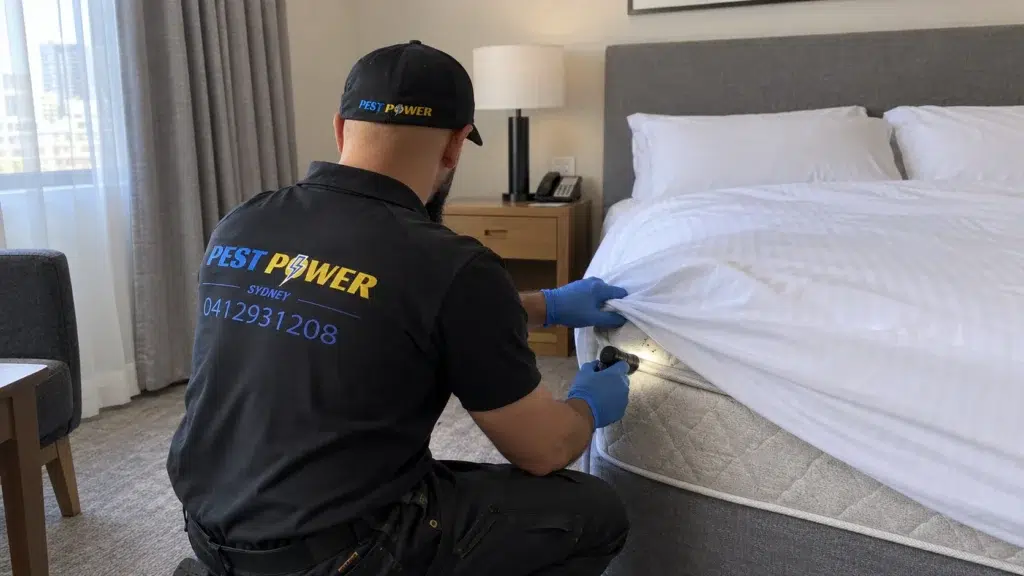
You had a professional treatment done. The technician came through, treated the bedroom, and for a week or two things seemed to be getting better. Then the bites started again.
This is one of the most common and frustrating experiences for Sydney homeowners dealing with bed bugs. In many cases, the treatment product itself is not the problem. Missed harbourage is often a contributing factor, alongside preparation quality, resistance, and whether follow-up visits were completed.
At Pest Power Sydney, we’ve inspected properties after failed treatments many times. A recurring issue is that harbourage sites deeper in the room, or in other parts of the home, are not fully identified before treatment begins. When those spots are missed, bugs sheltering there remain undisturbed.
Identifying every one of these hiding spots before treatment begins is what separates a resolved infestation from one that keeps coming back.
Why Bed Bugs Are Difficult to Fully Eliminate
Bed bugs are built for concealment. Their bodies are flat enough to compress into a gap the thickness of a credit card, which means almost any crack, seam, or recessed surface becomes potential harbourage. They are nocturnal, inactive during the day, and capable of surviving for extended periods without feeding depending on temperature and conditions.
A treatment applied to visible surfaces does not reach bed bugs sheltering inside a screw hole, behind a skirting board, or in other concealed locations. Those bugs wait, undisturbed, until conditions settle and then begin feeding again.
The second issue is eggs. Bed bug eggs are approximately 1mm long, sticky, and deposited directly into harbourage sites. Some treatments may not kill eggs, which means viable eggs left in an unchecked spot can hatch and produce nymphs that begin feeding shortly after. An infestation does not need many survivors to restart.
The Hiding Spots That Most Treatments Miss
Behind the Mattress Stitching and Inside the Ensemble Bed Base
Most people know bed bugs can be on a mattress. What they do not realise is that the mattress surface itself is rarely where they live. The actual harbourage is inside the stitched seams around the perimeter, in the tufted indentations on the top panel, inside the handle pockets on the sides, and within the fabric folds at the corners.
Ensemble bed bases are also worth checking thoroughly. The underside fabric can be loose or damaged, and the internal frame creates sheltered ledges that are difficult to treat without direct access. An inspection that covers only the top surface of a mattress will miss a significant portion of the actual risk on the bed itself.
Bed Frame Joints, Headboard Brackets, and Base Slats
Hollow bed frame legs are one of the most consistently missed harbourage sites. Bed bugs travel through the interior of tubular metal frames and shelter in the recesses where legs attach to the base rail. Screw holes in timber frames, the gap between a headboard and the wall, and the slot where slats sit in their brackets are all worth inspecting in an active infestation.
In older Sydney homes where furniture has been in place for years and frames have accumulated gaps and play in their joints, this is particularly significant. A thorough inspection of a bed frame takes considerably longer than most people expect.
Power Points and Wall Cavities
Power points are a harbourage site that surprises many homeowners, and the issue is especially relevant in Sydney apartments. Bed bugs can move through wall cavities using electrical conduits as a pathway. The space behind a power point cover is warm, dark, and often located close to where people sleep. A pest technician can inspect these areas as part of a thorough treatment assessment.
In apartment buildings, this is also relevant as a travel route between units. Bugs in a neighbouring apartment may travel through shared wall cavities and emerge through power points on your side. Treatment focused only on one unit, in this situation, addresses the symptom but not the source.
Inside Furniture Beyond the Bedroom
In some infestations, bed bugs spread beyond the bedroom before they are detected. Sofas are a known secondary harbourage site, specifically the webbing underneath the base, the mechanism of a recliner, the seams along cushion panels, and the gap where the armrest meets the frame.
Dining chairs with padded seats, upholstered ottomans, and bedside tables with drawers or hollow legs are all capable of harbouring bed bugs. If an adjacent room is left unchecked during treatment, activity from that area may continue.
Curtain Rods, Rod Ends, and Curtain Rings
Curtain hardware is overlooked in almost every home inspection that is not carried out by a specialist. The hollow interior of a curtain rod is a direct harbourage site. The plastic or metal finials at each end create a recessed cavity. Curtain rings with hollow centres, and the wall bracket mounting points, all provide sheltered locations close to a sleeping area.
Because curtains are near windows and away from the bed, most homeowners do not connect them to a bed bug problem. Proximity to a sleeping person is what creates the risk, not proximity to the mattress itself.
Behind Loose Skirting Boards, Wallpaper Edges, and Architraves
Sydney’s older housing stock, particularly the terrace houses, federation homes, and pre-war apartments found in the inner city, inner west, and eastern suburbs, often has skirting boards that have shifted, lifted, or been repaired over time. Any gap between a skirting board and a wall is viable harbourage. The same applies to lifted wallpaper edges and the gap between an architrave and its wall mounting.
These sites are difficult to treat without direct access. A surface spray applied to the wall above a skirting board does not reach bugs sheltering behind it. In some cases, physical access and targeted application to the gap itself is the only effective approach.
Books, Picture Frames, and Bedside Clutter
Bed bugs shelter in contact points, surfaces pressed tightly together where they can remain completely hidden. A stack of books beside a bed, picture frames hung close to a sleeping area, phone charging cables wound into a bundle, a stack of magazines: all of these create tight, sheltered gaps where bed bugs can aggregate during the day.
This type of harbourage is not where bed bugs live permanently, but it is where they can shelter between feeds. Treatment that does not account for objects around the sleeping area may leave active harbourage sites untouched.
Why Sydney Apartments Create a Specific Problem
Bed bug infestations in Sydney apartment buildings behave differently from those in standalone houses, and the treatment approach needs to reflect that.
In an apartment, the source of an infestation is often not within the unit being treated. Shared wall cavities, pipe chases, plumbing access points, and electrical conduits all create pathways between adjacent units. A property that re-infests within weeks of treatment, despite thorough inspection and application, is often dealing with ongoing movement from a neighbouring apartment where the infestation has not been addressed.
In strata buildings, this creates a coordination problem. Treatment of one unit is rarely sufficient when bugs are actively moving through the building’s structure. Identifying which units are affected and treating them in a coordinated way, rather than unit by unit as individual tenants report problems, is what resolves building-level infestations rather than just relocating them.
What a Proper Bed Bug Inspection Actually Covers
A thorough bed bug inspection is not a five-minute walk through the bedroom. It covers every item of furniture in the affected room and all adjacent rooms, all soft furnishings including sofas and dining chairs, power points and wall cavity access points, and the structural features of the room including skirting boards, architraves, and any gaps in the ceiling or floor junction.
In older properties, wall cavities and access points are also checked. Where monitoring devices have been in place, those are examined for activity patterns that indicate the direction bugs are travelling from.
This level of inspection takes time and requires moving furniture, accessing hard-to-reach areas, and examining surfaces that are not visible during a basic walk-through. It is also what makes the difference between a treatment that works on the first attempt and one that results in a call-back four weeks later.
If you are seeing signs of bed bugs in your Sydney home, such as bites, blood spotting on sheets, or live insects, contact Pest Power Sydney before attempting any treatment. The inspection stage is where infestations are resolved or prolonged.
Why Missed Spots Allow Infestations to Return
A single overlooked harbourage site can be enough to restart an infestation. Some treatments may not kill eggs, which means viable eggs left in an unchecked spot can hatch and produce a new generation of nymphs. Those nymphs mature and begin feeding, and over time the population that was reduced by treatment starts to rebuild.
This is why the scope of an inspection matters alongside the treatment method and product used. When a property re-infests after treatment, it is worth reviewing which areas were inspected and whether any of the sites listed above were missed or inaccessible.
When to Call a Professional and What to Tell Them
If you have already attempted treatment, whether a DIY product or a previous professional service, tell the technician before the inspection begins. Describe where you have seen activity, which rooms are affected, whether you have recently travelled or brought second-hand furniture into the home, and what you have already tried.
This information directly shapes where the inspection focuses and which treatment approach is recommended. A technician going into a re-infestation scenario needs a different starting point than one attending an initial report.
Pest Power Sydney is licensed and insured, and our technicians are experienced with the specific challenges of bed bug pest control in Sydney’s apartment stock, older inner-city homes, and high-density residential buildings. If you are dealing with a repeat infestation or want an inspection carried out properly the first time, call us on 0412 931 208.
Frequently Asked Questions
Can bed bugs survive inside walls between treatments?
Yes. Bed bugs travel through wall cavities, particularly in older buildings with gaps around pipes, conduits, and electrical wiring. They can shelter there between treatments and re-emerge once activity in the treated room drops off. In apartment buildings this is one of the most common reasons an infestation returns after treatment.
How long after treatment can bed bugs re-emerge from harbourage?
It depends on what survived. Adult bugs sheltering in a missed location can re-emerge once residual effects diminish. Eggs that are not killed by the treatment will eventually hatch and produce a new generation. If activity returns after treatment, it is worth having the property re-inspected with a focus on the less obvious harbourage sites.
Does heat treatment reach all these hiding spots?
Heat-based treatment approaches aim to raise temperatures throughout a room, including inside furniture and wall cavities, which can address harbourage sites that surface sprays may not reach. Preparation is still important, as certain conditions can prevent even heat from penetrating all areas effectively. Speak to a pest technician about whether a thermal treatment option is available and suitable for your property.
How do I know if the infestation is coming from a neighbouring apartment?
The main indicator is re-infestation that occurs shortly after thorough treatment, with activity concentrated near shared walls or entry points such as power points on party walls. If you live in an apartment building and are experiencing repeat infestations, it is worth raising the issue with your building manager or strata committee to determine whether neighbouring units are also affected.
What should I do before a professional bed bug inspection?
Do not move furniture between rooms or bag and relocate items, as this can spread harbourage to areas that were not affected. Leave the room as close to its normal state as possible. Strip the bed and leave bedding accessible. Note where you have seen activity and how recently. If you have travelled or purchased second-hand furniture recently, have that information ready for the technician.